November 08, 2026
Can All Men’s Wedding Bands Be Resized?
Not all men’s wedding bands can be resized, but many can. Whether a ring can be safely adjusted depends on its metal, construction, design details, condition, and how much larger or smaller it needs to be.
A comfortable fit matters because a wedding band is made for daily wear, and finger size can change with activity, weight changes, and age. At Harris Jewelers, our gemologists, designers, and repair specialists help shoppers in Rio Rancho and Albuquerque understand their options before they choose or alter a ring.
Why Men’s Sterling Silver Wedding Bands Can Often Be Resized
Precious metals are usually the most workable choices for resizing. Gold, platinum, and sterling silver can often be adjusted because a trained jeweler can remove or add metal while preserving the ring’s shape and strength.
Many men’s sterling silver wedding bands are good candidates for resizing, especially if they have a simple, solid design. Sterling silver has a bright look, works well with many styles, and offers flexibility when a size adjustment becomes necessary. Still, silver needs skilled handling to avoid weakening the band or leaving a visible change in its finish.
The method depends on whether the band needs to go smaller or larger:
-
To make a ring smaller, our repair specialists remove a small section of metal and carefully solder the band back together.
-
To make a ring larger, we may make a limited adjustment by stretching the band or adding matching metal.
-
The safest approach depends on the ring’s width, thickness, condition, and requested size change.
Before any work begins, we inspect the ring closely. Prior repairs, worn areas, thin metal, and decorative details can all affect what is possible. A careful evaluation gives you a clearer answer than assuming every sterling silver band can be altered the same way.
When a Wedding Band Cannot Be Safely Resized
Alternative metals are known for their durability, but that same strength can make traditional resizing difficult or impossible. Tungsten, ceramic, titanium, cobalt, and stainless steel generally cannot be soldered, stretched, or reshaped like gold, platinum, or silver.
A ring made from a precious metal may also be a poor candidate for resizing when its design leaves no simple place to make an adjustment. Certain features can be affected by cutting or adding metal, including:
-
Stones that continue all the way around the band
-
Engraving or patterns that wrap around the full ring
-
Fragile filigree or thin decorative sections
-
Wood, meteorite, or other inlays
-
Detailed mixed-metal designs
The amount of resizing matters, too. A small size adjustment may work well, while a larger change can affect the band’s proportions, durability, or design symmetry. Rather than risk damage to a ring that cannot safely be altered, it may be necessary to choose another band in the correct size.
How Band Design Affects Your Options
Metal is only part of the story. A simple, solid band is usually the easiest style to resize because the jeweler has a clear area on the shank where an adjustment can be made with minimal change to the overall look.
Width also affects both comfort and sizing. A wide wedding band covers more of the finger than a narrow one, so it may feel tighter even when both rings are marked with the same size. This is why we recommend trying on men’s sterling silver wedding bands in the width you actually plan to wear. The size that feels right in a slim band may not feel right in a broader style.
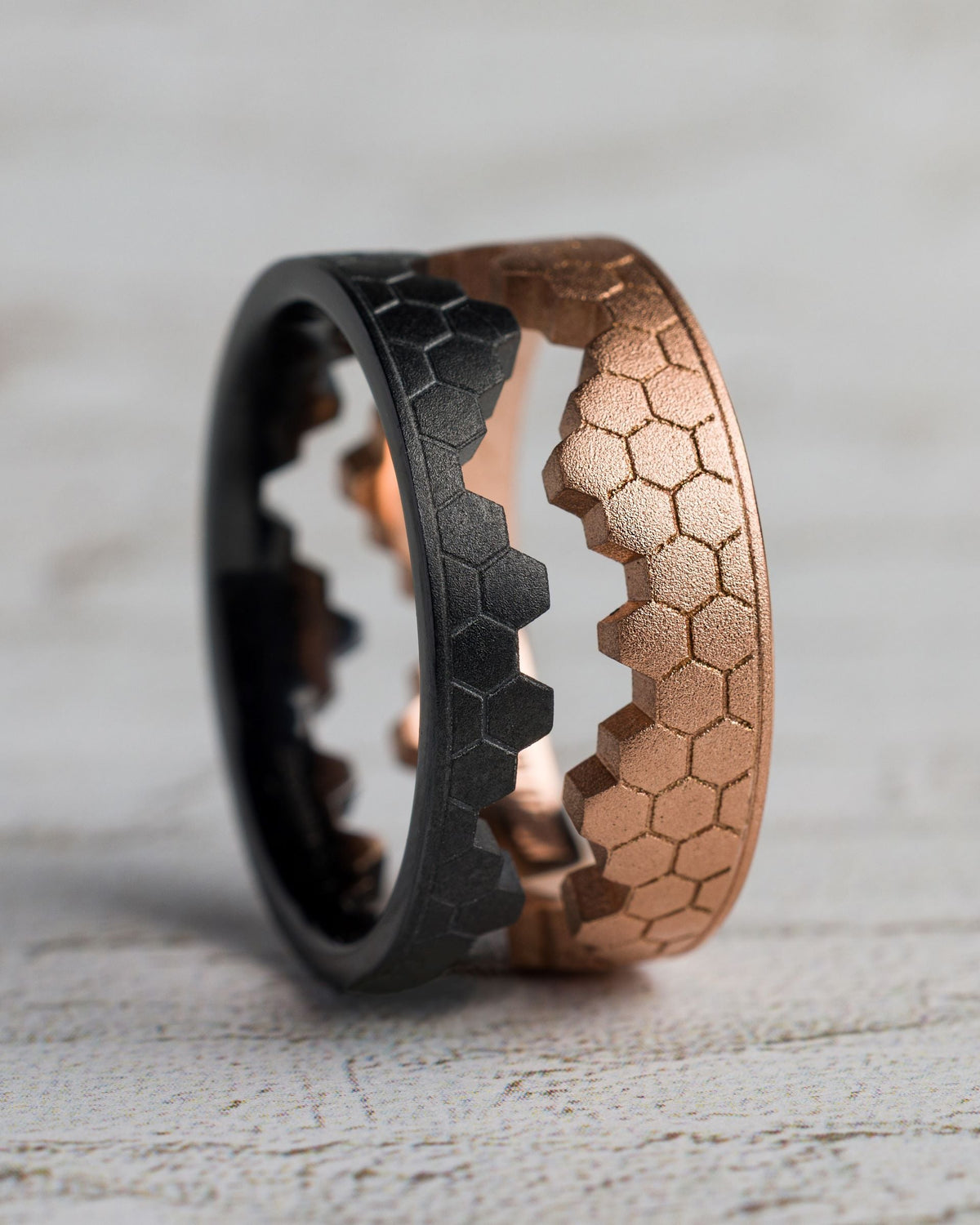
Some design elements need extra care. Channel-set stones, grooves, milgrain edges, blackened finishes, personalized engraving, and contrasting metals can shift during a resize. In some cases, a finish can be restored afterward. In others, the pattern may no longer line up perfectly or may need refinishing to look balanced again.
Thinking ahead can help when choosing a band. A classic gold, platinum, or sterling silver design may give you more flexibility if your finger size changes later. If you prefer an alternative metal or a detailed style, getting the correct fit at purchase and understanding its sizing limitations can bring added peace of mind.
What Happens During Professional Ring Sizing
Professional sizing starts with an in-person assessment. We measure your finger and consider the band’s width, interior shape, and how it feels as it moves over the knuckle. Then, our repair specialists inspect the ring for signs of wear, previous repairs, stones, inlays, or other details that could affect the work.
Once we understand the ring, we can recommend the safest path. For gold, platinum, and sterling silver bands, that may mean removing metal, adding matching metal, or making a limited adjustment. If the requested change could compromise the ring, we explain why and discuss an appropriate alternative rather than forcing a risky repair.
After resizing, the ring is cleaned, polished, and checked to make sure the seam is secure and the band remains round and balanced. Special finishes and engravings may require additional attention, so it is helpful to understand what can be restored before work begins.
Find a Wedding Band That Fits for Life
Many precious metal wedding bands can be resized, but no two rings should be treated exactly alike. The metal, width, design, condition, and size change all help determine whether an adjustment is a smart choice.
The best fit is one that feels secure without pinching, spins only slightly, and moves over the knuckle without a struggle. A professional sizing evaluation can protect the ring’s appearance and structure while helping you make a confident choice for long-term daily wear.
Find A Band Built For Everyday Comfort
Browse our selection of men's sterling silver wedding bands to compare styles designed for lasting wear. At Harris Jewelers, we can help you consider band profiles, widths, and finishes that suit your personal style. For personalized assistance with your selection, contact us today.